How to Choose Bottle Blowing Machine for New Buyers: A Complete Technical Guide
If you are new to the packaging industry and planning to produce PET bottles for water, beverages, edible oil, cosmetics or daily chemicals, learning how to choose bottle blowing machine for new buyers is one of the most critical steps for your business success. For first-time buyers, the technical terms, working principles and equipment specifications can be overwhelming. This guide breaks down the core technology of bottle blowing machines in simple, practical terms, helping you understand how they work, what key features to look for, and how to pick the right model when you want to choose bottle blowing machine for new buyers.
Understand the Working Principle of Bottle Blowing Machine
Before you learn how to choose bottle blowing machine for new buyers, you must first understand the basic working principle of the equipment. A bottle blowing machine converts PET preforms into finished plastic bottles using heat and high-pressure air. The entire process relies on two core principles: thermal forming and stretch blow molding.
The process has four key stages:
Preform Heating: PET preforms are loaded into an infrared oven, heated evenly to 85–125°C. The neck remains unheated to avoid deformation, ensuring a tight cap seal.
Stretching: A mechanical stretch rod elongates the heated preform vertically, aligning polymer molecules to improve bottle strength and clarity.
Blowing: High-pressure compressed air (25–40 bar) is injected into the stretched preform, forcing it to expand into the mold cavity.
Cooling and Ejection: The bottle is cooled inside the mold to set its shape, then ejected as a finished product.
This workflow is the foundation of all PET bottle production, whether using semi-automatic or fully automatic bottle blowing machines. Understanding each stage will help you evaluate machine performance more accurately when you compare different models.
Key Technical Factors to Check When You Choose Bottle Blowing Machine for New Buyers
For new buyers, the quality of the final bottle is directly tied to the technical design of the bottle blowing machine. Here are the most critical factors to evaluate when you choose bottle blowing machine for new buyers:
Heating System Uniformity
Uneven heating is the top cause of defective bottles, including cloudy walls, thin spots and uneven thickness. High-quality bottle blowing machines use precision infrared lamps with adjustable temperature zones, ensuring every part of the preform reaches the ideal temperature. Look for machines with independent temperature controls for different oven sections—this allows fine-tuning for different preform sizes and shapes, a key point when you learn how to choose bottle blowing machine for new buyers.
Stretch and Blow Ratio Control
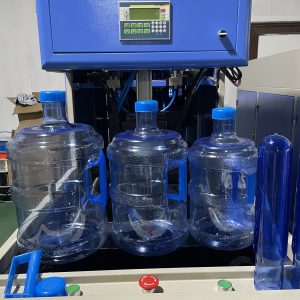
The stretch ratio (how far the rod elongates the preform) and blow ratio (how much air expands the preform) determine the bottle’s structural integrity. Machines with adjustable stretch rod speed and pre-blow air pressure let you optimize these ratios for different bottle designs. For example, large 5-gallon water jugs require a longer stretch stroke and higher blow pressure than small 500ml water bottles, making this adjustment flexibility essential when you choose bottle blowing machine for new buyers.
Mold Compatibility and Precision
The mold is where the bottle takes its final shape, so precision is non-negotiable. Look for bottle blowing machines that support custom mold sizes and quick-change mold systems. High-precision molds ensure consistent bottle dimensions, leak-proof seals and smooth surfaces, reducing scrap rates and improving production efficiency. This is especially important if you plan to produce multiple bottle types, a common need for new buyers expanding their product line.
Pneumatic and Hydraulic Stability
Unstable air pressure or hydraulic power leads to inconsistent bottle forming. Reliable machines use high-quality pneumatic components (like SMC or Festo valves) and stable air compressors to maintain constant pressure during the blow process. This stability minimizes defects and downtime, a major advantage when you choose bottle blowing machine for new buyers who lack troubleshooting experience.
Semi-Automatic vs. Fully Automatic Bottle Blowing Machine: Which to Choose for New Buyers?
New buyers often struggle to choose between semi-automatic and fully automatic models. The decision depends on your production volume, budget and operational capacity, a key consideration when learning how to choose bottle blowing machine for new buyers.
Semi-Automatic Bottle Blowing Machine
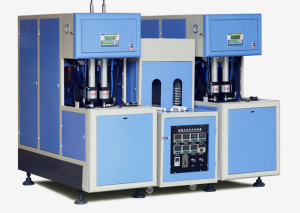
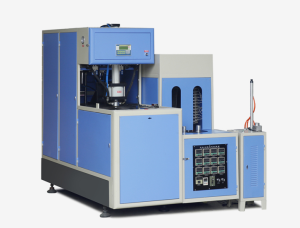
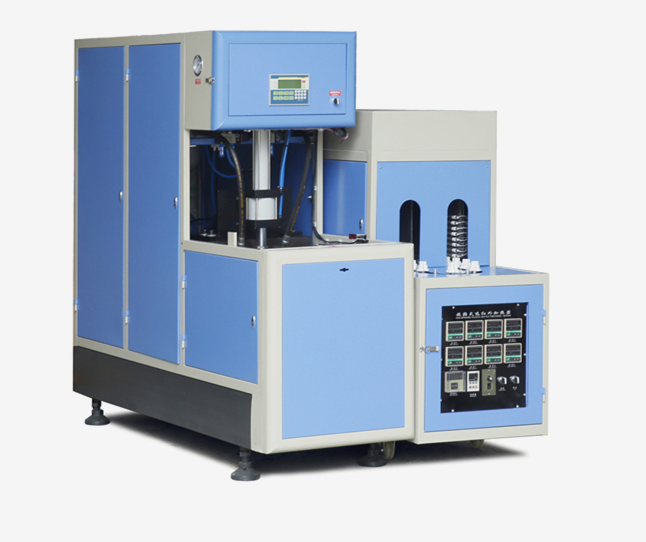
These machines require manual loading of preforms and unloading of finished bottles, but they offer several advantages for new businesses:
• Low initial investment: Perfect for small factories or startups with limited budgets.
• Compact footprint: Fits in small workshops, saving on rent costs.
• Easy operation and maintenance: No complex PLC programming required; basic training is enough for workers to operate the machine.
• Flexible production: Ideal for small-batch runs or multiple bottle types, as molds can be changed quickly.
They are best suited for daily output below 10,000 bottles, making them a popular choice when you choose bottle blowing machine for new buyers in the Middle East, Africa and Southeast Asia.
Fully Automatic Bottle Blowing Machine
These machines automate the entire process, from preform feeding to bottle ejection, making them ideal for high-volume production:
High efficiency: Output ranges from 2,000 to 12,000 bottles per hour, depending on the number of cavities.
Consistent quality: Automated controls eliminate human error, ensuring uniform bottle quality.
Labor savings: Requires only one operator to monitor the machine, reducing long-term labor costs.
However, they come with higher upfront costs, larger space requirements and more complex maintenance needs. New buyers should only consider fully automatic models if they have stable, high-volume orders and a dedicated maintenance team.
Essential Supporting Equipment for Your Bottle Blowing Machine
When you choose bottle blowing machine for new buyers, don’t forget the supporting equipment that keeps production running smoothly:
• Air Compressor: Provides the high-pressure air needed for blowing. The required capacity depends on the number of cavities and blow pressure.
• Chiller/Cooling System: Maintains mold temperature to ensure consistent bottle cooling.
• Air Dryer and Filter: Removes moisture and impurities from compressed air, preventing bottle defects and protecting the machine’s pneumatic components.
• Preform Feeder (for automatic machines): Automatically loads preforms into the oven, improving efficiency.
Many new buyers overlook these items, leading to production delays and unexpected costs. A reliable supplier will provide a complete package with all necessary supporting equipment and installation guidance.
Why Choose Us as Your Bottle Blowing Machine Supplier
At https://www.bottleblowingmachine.com/, we specialize in providing tailored solutions when you want to choose bottle blowing machine for new buyers. We understand that new buyers need not only reliable equipment but also professional guidance to start production smoothly. All our semi-automatic and fully automatic bottle blowing machines are designed with stable performance, easy operation and low failure rate, ideal for small factories and startup businesses.
Whether you need a machine for water bottles, oil bottles, cosmetic bottles or large gallon bottles, we can help you select the right model based on your production volume and bottle specifications. We also provide free factory layout planning, on-site installation, operator training and long-term after-sales support. If you still don’t know how to choose bottle blowing machine for new buyers for your project, contact us today for a free quotation and one-on-one technical consultation. We help you start your bottle making business with confidence.