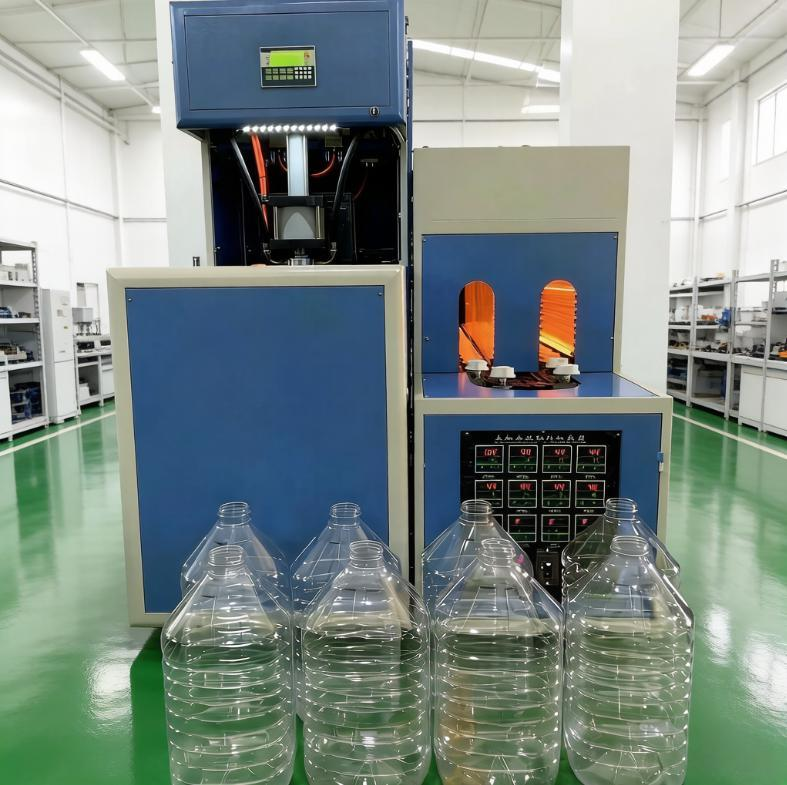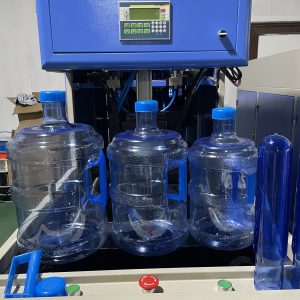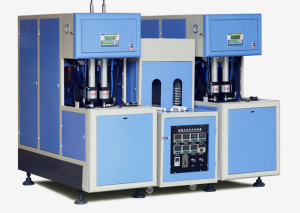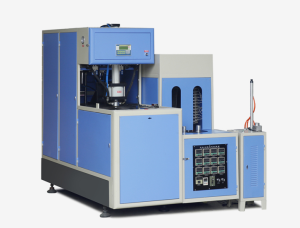
Guide to Avoiding Pitfalls in Bottle Blowing Machine Selection:The First Step to Making the Right Choice is “Looking Inward”
Introduction
In the plastic packaging industry, the bottle blowing machine is the heart of production. Faced with a dazzling array of machine models on the market, many buyers easily fall into a “parameter race” or a “price trap”, ultimately purchasing equipment that either “overkills” and wastes resources or “underperforms” and drags down production capacity. To truly select the right bottle blowing machine, the first consideration should not be the machine itself, but clearly defining your own product profile and production boundaries.
Three Critical Questions to Ask Yourself First
Before contacting any supplier, be sure to answer the following questions with data—this is the cornerstone of selection:
1.”What am I blowing?” – Raw Materials and Bottle Types
This is the starting point for technical selection. The physical properties of PET (beverage bottles), HDPE (daily chemical bottles), and PP (pharmaceutical bottles) vary drastically. PET requires high-precision two-step stretch blow molding to ensure transparency and internal pressure resistance; HDPE mostly uses extrusion blow molding. Meanwhile, is your bottle a standard round bottle or a special-shaped bottle? A wide-mouth bottle or a narrow-mouth bottle? This directly determines the machine’s mold compatibility requirements.
2″How much am I blowing?” – Production Capacity and Rhythm
Don’t just focus on the theoretical maximum capacity; pay attention to the daily actual demand. Is it large-scale production with 24/7 three-shift operation, or small-batch customization with an 8-hour single shift? Production capacity demand dictates whether you should choose a fully automatic high-speed machine with 6-cavity/8-cavity output, or an economical model such as a semi-automatic machine or 2-cavity output. Remember: reserve a 15%-20% capacity margin to cope with peak seasons, but blindly pursuing ultra-high capacity will lead to high equipment idle rates and a decline in return on investment (ROI).
3″Who am I selling to?” – Quality and Standards
Are your customers the wholesale market pursuing extreme cost performance, or brand merchants with zero tolerance for bottle surface defects? This determines your tolerance for the yield rate. For hot filling (e.g., fruit juice, tea drinks), you must select a special machine for heat-resistant bottles; for carbonated drinks, ensure the clamping force is sufficient to withstand the impact of high-pressure gas.
How to Truly Make the Right Choice: Advancing from “Usable” to “Easy to Use”
After clarifying internal demands, focus on the following four dimensions when screening equipment:
Process Compatibility: One-step vs Two-step
Two-step blow molding (injection molding of preforms first, then blow molding) is currently the mainstream in the beverage industry, featuring high capacity and uniform bottle walls, suitable for large-scale production of a single bottle type. One-step blow molding (integrated injection-stretch-blow) occupies a small space and is pollution-free, ideal for small-batch, multi-variety production or the pharmaceutical and cosmetics fields with extremely high hygiene requirements. Choosing the wrong process type will lead to a multiple increase in subsequent operating costs.
Energy Consumption and Stability
Bottle blowing machines are major consumers of electricity and compressed air. Prioritize energy-saving models equipped with servo motors and frequency conversion technology—although the initial investment is slightly higher, the electricity cost savings during long-term operation are considerable. Stability is more important than peak speed; the downtime loss of a machine with a high failure rate is far greater than the price difference at the time of purchase.
Molds and Supporting Equipment
The bottle blowing machine is the main unit, and the mold is its soul. Confirm whether the supplier has the ability to customize molds for you and whether mold change is convenient (with a quick-change system). Meanwhile, the matching degree of the air compressor (air source) is often overlooked; unstable air pressure will cause bottles to be under-inflated or burst frequently.
After-sales Service and Technical Support
Bottle blowing machines are precision equipment and will inevitably break down. Evaluate the supplier’s response speed, spare parts inventory, and whether it provides process debugging support. A supplier that can help you solve process problems such as uneven wall thickness and white bottle bottoms is far more valuable than one that only sells hardware.
Conclusion
Selecting a bottle blowing machine is essentially finding the most matching production partner for your products. Don’t be misled by fancy parameters; return to your preforms, your orders, and your workshop environment, and deduce equipment specifications based on real demands. Only in this way can you avoid the embarrassment of “cheap to buy, expensive to use” and achieve true cost reduction and efficiency improvement.
Choose Hench for the right bottle blowing machine at the right cost—no overspending, no mismatches.Contact us now for your ideal solution.