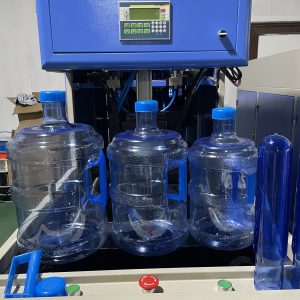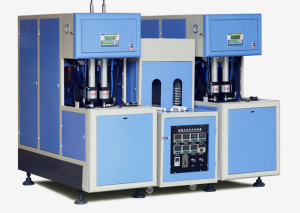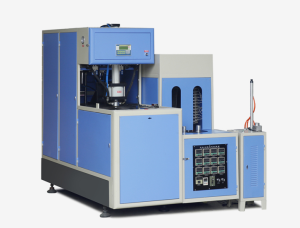
How to Save Electricity Cost in Bottle Blowing Machine: Reduce Heating System Power Consumption by 30%+
The heating system of a PET bottle blowing machine is known as the biggest power consumer of the entire production line, accounting for 50%–70% of total energy consumption. To achieve real power saving on the heating system, the core idea is precise heating: let every kilowatt-hour of electricity be converted into effective heat for the preform, instead of being wasted into the air.
This article shares practical technical solutions from hardware upgrading, intelligent control, structure optimization and daily maintenance, helping you greatly reduce power consumption and lower production costs.
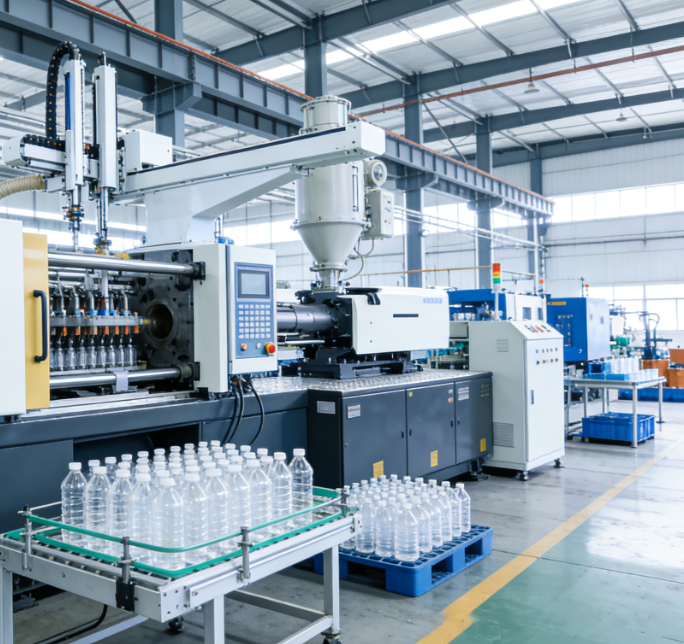
1. Hardware Upgrading: High-Efficiency Lamps & Optimized Reflector System
1.1 Spectral Matching Lamp & Half-White Coated Technology
Traditional halogen lamps emit full-spectrum radiation, and most energy is wasted on wavelengths that PET cannot absorb.
By upgrading to carbon fiber infrared lamps or medium-wave infrared lamps, the radiation peak (around 3.4μm) highly matches the absorption peak of PET material. The thermal conversion efficiency can be improved by 15%–20%.
Meanwhile, half-white coated quartz lamps reflect heat toward the preform instead of the oven wall, raising effective radiation utilization from 60% to over 85%.
1.2 High-Reflectivity Reflector Covers
The reflector inside the heating oven acts like a condenser.
Upgrading ordinary aluminum plates to high-purity anodized aluminum reflectors (reflectivity >92%) or ceramic reflectors, together with an elliptical focusing structure, can concentrate infrared heat precisely on the preform surface.
Tests show that optimized reflector design reduces heating power consumption by 10%–15%.
2. Intelligent Control: From Open-Loop to Closed-Loop Precise Control
2.1 Multi-Zone Independent Closed-Loop Temperature Control
Traditional blowing machines use simple open-loop control, which easily causes overheating at the neck or insufficient heating in the body.
Modern systems adopt 12–24 independent heating zones, each equipped with real-time infrared temperature sensors. The system automatically adjusts power output based on actual preform temperature, realizing true on-demand heating.
- Low power for the neck and bottom (anti-crystallization)
- High power for the body stretching zone
This control mode saves 15%–25% energy.
2.2 Pulse Heating & Intelligent Standby Management
Using high-frequency pulse power supply instead of continuous heating avoids overheating and energy waste.
During standby (mold change, shutdown, fault), the system automatically enters low-power heat preservation mode or cuts off heating power directly, eliminating unnecessary empty heating.
3. Structure & Process Optimization: Compact Oven & Waste Heat Recovery
3.1 Compact Heating Oven & Dual-Channel Design
A compact oven structure shortens the preform conveying distance and reduces heat loss through openings.
The dual-channel heating oven allows one lamp to heat two preforms at the same time, cutting per-unit heating energy consumption by 30%–40%.
3.2 Preform Lightweight & Preheating
Reducing preform wall thickness shortens heating time.
Using waste heat from exhaust gas or cooling water to preheat cold preforms to 40–50°C before entering the main oven greatly reduces the load of the main heating system.
4. Daily Maintenance: Low-Cost Power Saving Measures
- Clean lamps and reflectors weekly: Dust reduces reflectivity by over 30% and increases power consumption sharply.
- Replace aging lamps on time: After 5000 hours, efficiency drops significantly, causing higher energy consumption.
- Check heat insulation regularly: Damaged insulation layers lead to massive heat loss.
Conclusion
With the combination of spectral matching lamps, high-efficiency reflectors, and closed-loop multi-zone temperature control, the heating system of a bottle blowing machine can reduce power consumption per product by more than 30%.
For large-scale production lines with an annual output of hundreds of millions of bottles, annual electricity cost savings can reach millions of dollars.