PET Automatic Blow Molding Machine: Common Technical Issues & Operation Notes
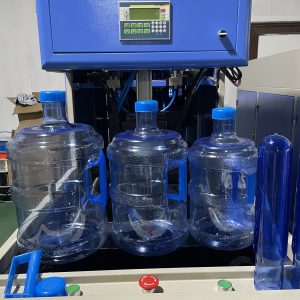
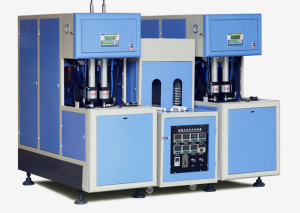
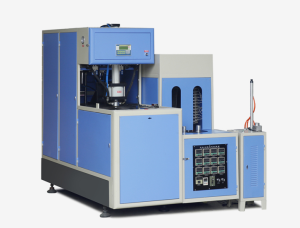
The PET automatic blow molding machine is the core equipment for producing packaging bottles in beverage, food, daily chemical and other industries. The blow molding process of a PET automatic blow molding machine is essentially the biaxial stretch forming of PET material. During this process, PET molecular chains are biaxially extended, oriented and arranged in order with the stretching action. This change significantly improves the mechanical properties of the bottle wall, giving the bottle excellent tensile strength and impact resistance, while effectively enhancing the air tightness of the bottle body to ensure storage stability of packaged contents. However, the stretching process must be strictly controlled to avoid over‑stretching. The radial stretch blow‑up ratio should be controlled between 3.5 and 4.2, the axial stretch blow‑up ratio between 2.8 and 3.1, and the preform wall thickness should not exceed 4.5 mm. Otherwise, problems such as uneven forming and easy breakage of the bottle body will occur.
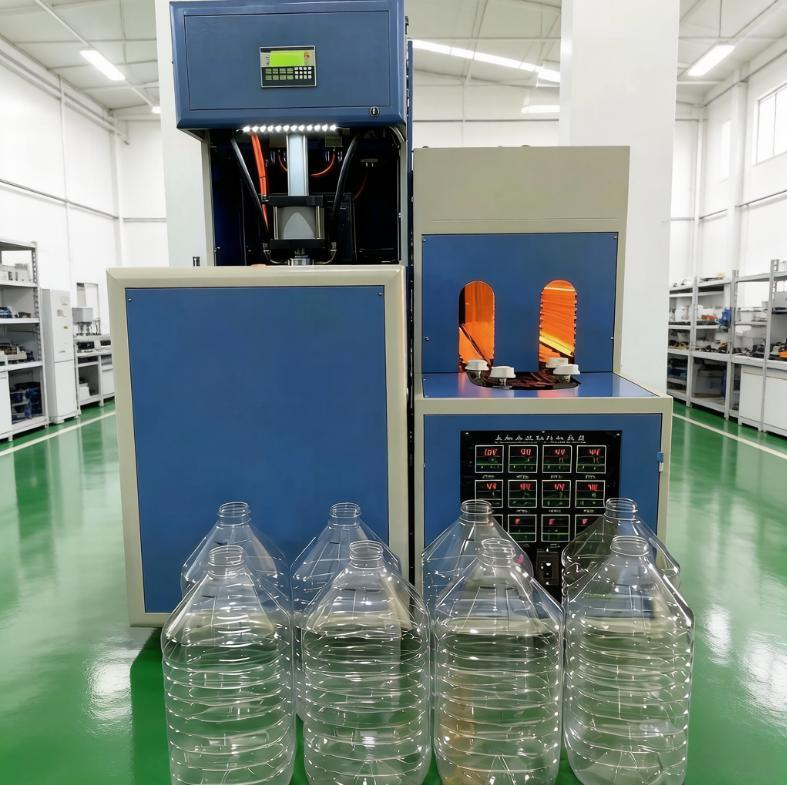
Core Forming Principles of PET Automatic Blow Molding Machine
Temperature Control Requirements for PET Automatic Blow Molding Machine
Blow molding of a PET automatic blow molding machine must be carried out within a specific temperature range, between the glass transition temperature and crystallization temperature of PET material, usually controlled at 90–120°C. Within this temperature range, PET material exhibits a high‑elastic state, which is convenient for rapid blow molding. After cooling and setting, transparent and regular packaging bottles can be formed. In the one‑step blow molding process, this key temperature is determined by the cooling time in the injection molding stage. Therefore, the operation rhythm between the injection molding and blow molding stations must be accurately connected to avoid bottle forming defects caused by improper temperature connection.
Three‑Stage Forming Action of PET Automatic Blow Molding Machine
The blow molding process mainly includes three core actions: stretching, primary blowing (pre‑blowing) and secondary blowing (high‑pressure blowing). Although each action takes a very short time, the matching accuracy of the three directly determines the uniform distribution of raw materials and production quality of the PET automatic blow molding machine. In actual operation, various parameters need to be adjusted precisely: the starting time and speed of stretching must be accurately matched to avoid local breakage caused by too fast stretching or insufficient stretching caused by too slow stretching. The starting and ending time of pre‑blowing, pre‑blowing pressure and flow rate must be strictly controlled. Meanwhile, the overall temperature distribution and inner/outer wall temperature gradient of the preform should be controlled as much as possible to reduce forming problems caused by uneven temperature.
Common Technical Faults & Solutions for PET Automatic Blow Molding Machine
During rapid blowing and cooling, induced stress easily occurs in the bottle wall, leading to a variety of common failures. The following are specific problems and corresponding solutions for the PET automatic blow molding machine.
Thick Top & Thin Bottom
Cause: Pre‑blowing starts too early or pressure/flow rate is too high.
Solution: Delay pre‑blowing time, reduce pre‑blowing pressure and decrease air flow.
Thick Bottom & Thin Top
Cause: Opposite to the above; pre‑blowing starts too late, pressure/flow rate insufficient.
Solution: Advance pre‑blowing time, increase pre‑blowing pressure and flow rate.
Wrinkles Below the Bottle Neck
Cause: Pre‑blowing too late, low pressure, or poor cooling at this part of the preform.
Solution: Adjust pre‑blowing parameters and optimize the cooling system.
Whitish Bottom
Cause: Low preform temperature, over‑stretching, early pre‑blowing or high pressure.
Solution: Properly increase preform temperature, adjust stretching range and pre‑blowing parameters.
Magnifying Effect at Bottle Bottom
Cause: Excess material at the bottom, late pre‑blowing or low pressure.
Solution: Reduce bottom feeding volume, adjust pre‑blowing timing and pressure.
Wrinkles Inside the Bottle Bottom
Cause: High bottom temperature, poor gate cooling, improper pre‑blowing parameters.
Solution: Lower bottom temperature, optimize gate cooling, adjust pre‑blowing timing, pressure and flow.
Cloudy & Opaque Whole Bottle
Cause: Insufficient cooling.
Solution: Improve cooling system efficiency and extend cooling time.
Local Whitish
Cause: Local over‑stretching, low temperature, early pre‑blowing or stretch rod touching the preform.
Solution: Adjust stretching parameters, local temperature and pre‑blowing timing; check stretch rod position.
Eccentric Bottle Bottom
Cause: Related to preform temperature, stretching speed, pre‑blowing and high‑pressure blowing parameters.
Solution: Lower preform temperature, speed up stretching, check gap between rod head and bottom mold, delay pre‑blowing and high‑pressure blowing, check preform eccentricity.
Key Operation & Maintenance Notes for PET Automatic Blow Molding Machine
To ensure stable and efficient production, users must pay attention to the following points when operating a PET automatic blow molding machine.
Temperature Control Management
Keep the heating zone temperature uniform to avoid local overheating or underheating. For one‑step PET automatic blow molding machine, avoid disconnection between injection and blowing station temperatures.
Stretching & Blowing Sequence
Stretching start time, speed, pre‑blowing and high‑pressure blowing sequence must be adjusted synchronously. Too fast stretching causes broken bottles; too slow causes uneven wall thickness.
Cooling System Maintenance
Ensure stable cooling air pressure and volume, no blockage at air vents. Mold temperature, core rod temperature and bottom cooling need independent fine adjustment.
Preform Quality Control
Preforms must be free of bubbles, flow marks, eccentricity or yellowing. Preforms should be stored against moisture to avoid foaming during forming due to water absorption.
Mechanical Alignment & Precision
Stretch rod, bottom mold and neck mold must be aligned; otherwise eccentricity and bottom breakage will occur. Regularly check mold opening/closing mechanism, cylinder action and air tightness of seals.
Safety & Stable Production
Regularly check high‑pressure air lines for leaks to prevent injuries from burst bottles. Monitor heating lamps, thermocouples and inverters during continuous production. Stop immediately for inspection if continuous defects occur to avoid batch waste.
Conclusion
The PET automatic blow molding machine relies on precise biaxial stretching, reasonable temperature control and perfect coordination of pre‑blowing and high‑pressure blowing to produce high‑quality PET bottles. Mastering common technical problems and operation notes of the PET automatic blow molding machine can effectively reduce failure rate, improve product qualification rate and extend service life of the equipment. Whether for water bottles, beverage bottles, oil bottles or daily chemical containers, stable operation of the PET automatic blow molding machine is the key to efficient packaging production.