Why Do PET Bottles Get Deformed in Blow Molding?
Why PET bottles get deformed in blow molding? This is one of the most critical quality challenges facing manufacturers using PET bottle blowing machines across the packaging industry. Deformation issues—ranging from misshapen necks to uneven bottle bottoms—can lead to high scrap rates, compromised product integrity, and lost production efficiency. For businesses relying on fully automatic PET bottle blowing machines and semi-automatic PET bottle blowing machines, understanding the root causes of why PET bottles get deformed in blow molding is essential to maintaining consistent output and meeting packaging standards.
Why PET Bottles Get Deformed in Blow Molding: Common Deformation Types & Root Causes
1.Mouth Deformation
Mouth distortion is a top reason why PET bottles get deformed in blow molding, typically stemming from uneven heat transfer during the preform transport process. When the preform transfer chain fails to distribute heat evenly across the bottle neck, the PET material expands irregularly, resulting in a swollen or misaligned mouth. This not only affects the bottle’s ability to seal properly but also causes threading failures during capping, a clear sign of why PET bottles get deformed in blow molding.
2.Bottom Deformation
hree primary factors contribute to bottle bottom deformation, another key scenario explaining why PET bottles get deformed in blow molding:
• Excessively high mold oil temperature: Overheated bottom molds create uneven heating, causing the base to bulge or sink during forming.
• Malfunctioning bottom mold air valves: Faulty valves disrupt uniform airflow, leading to inconsistent inflation and a warped base.
• Overheated preform bottoms: Preforms with overly high bottom temperatures lose structural stability, resulting in misshapen bottle bases.
Adjusting oil temperature, replacing faulty valves, and tuning preform heating quickly resolves bottom bulging or sinking.
3.Neck Stiffness & Wrinkling
Rigid or wrinkled necks are often caused by imbalanced pre-blow parameters, a frequent culprit behind why PET bottles get deformed in blow molding:
- Excessive pre-blow pressure/flow: High pressure stretches the neck material too quickly, leading to creasing.
- Delayed pre-blow timing: Failing to initiate pre-blow early enough leaves the softened neck unsupported, resulting in folding or wrinkling.
- Insufficient neck heating: Inadequate heating reduces the material’s ductility, making it prone to cracking or stiffening.
Lower pre-blow pressure, advance start time, and raise neck temperature to form smooth necks.
4.Flat Bottles Along Clamping Lines
Flat spots along the mold’s clamping line occur when pressurized air leaks through the mold joint, a direct cause of why PET bottles get deformed in blow molding. Improper clamping pressure or worn mold seals allow gas to escape during inflation, leaving uneven, flattened areas on the bottle body.
5.Thread Damage
Damaged bottle threads are typically a result of alignment or cooling issues, another factor explaining why PET bottles get deformed in blow molding:
• Misaligned manipulators: Poor synchronization between the robotic arm and mold causes physical damage to the thread region.
• Incorrectly positioned blowing nozzles: Misaligned nozzles apply uneven pressure, distorting the thread shape.
• Overheated thread zones: Lack of targeted cooling leads to thermal expansion, altering thread dimensions.
Solutions to Why PET Bottles Get Deformed in Blow Molding
Resolving why PET bottles get deformed in blow molding requires a combination of parameter adjustments and equipment maintenance:
• Adjust mold oil temperature and preform heating settings to ensure uniform heat distribution, directly addressing why PET bottles get deformed in blow molding.
• Replace faulty bottom mold air valves and inspect mold seals to prevent air leaks, a key fix for why PET bottles get deformed in blow molding.
• Fine-tune pre-blow pressure, flow rate, and timing to support the neck during forming, reducing instances of why PET bottles get deformed in blow molding.
• Calibrate robotic manipulators and blowing nozzles to ensure precise alignment, minimizing cases of why PET bottles get deformed in blow molding.
• Implement targeted cooling systems for thread and neck regions to stabilize material dimensions, preventing why PET bottles get deformed in blow molding.
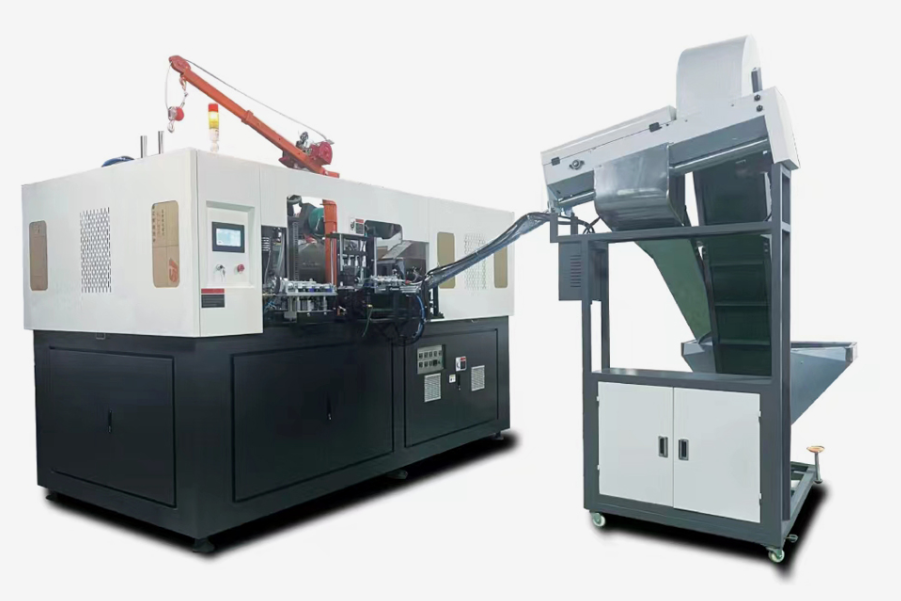
Prevent Deformation with High-Performance Blow Molding Equipment
IInvesting in reliable PET bottle blowing machines is the most effective long-term solution to minimize risks of why PET bottles get deformed in blow molding. Advanced models feature precise temperature control, uniform clamping systems, and automated alignment, which drastically reduce defects. Whether producing small water bottles, large edible oil containers, or 5-gallon jars, choosing the right equipment and following strict maintenance protocols ensures consistent, high-quality output.
By addressing the root causes of deformation and optimizing your blow molding process, you can reduce waste, improve product quality, and maximize the efficiency of your fully automatic & semi-automatic PET bottle blowing machines. For manufacturers looking to stay competitive in the global packaging market, mastering these deformation solutions is key to delivering reliable, high-quality PET bottles and maximizing the return on investment in your bottle blowing equipment.